Going South

by Justin Dobbs

       When you hear someone talk about “the South”, what usually comes to mind? For Americans, that usually means the southeastern U.S. States like Georgia, Alabama, Tennessee, the Carolinas, and more all have a unique cultural identity that very generally includes some form of barbecue, country music, church, and a heavy use of phrases like “y’all”. If you’ve seen films like Gone with the Wind or Forrest Gump, you probably already have an image in mind. As someone born and raised in Georgia myself, this is what “the South” meant for most of my life. However, after moving to Ehime, that all changed. Rather than sweet tea and college football, it now meant katsuo no tataki and Sakamoto Ryoma.

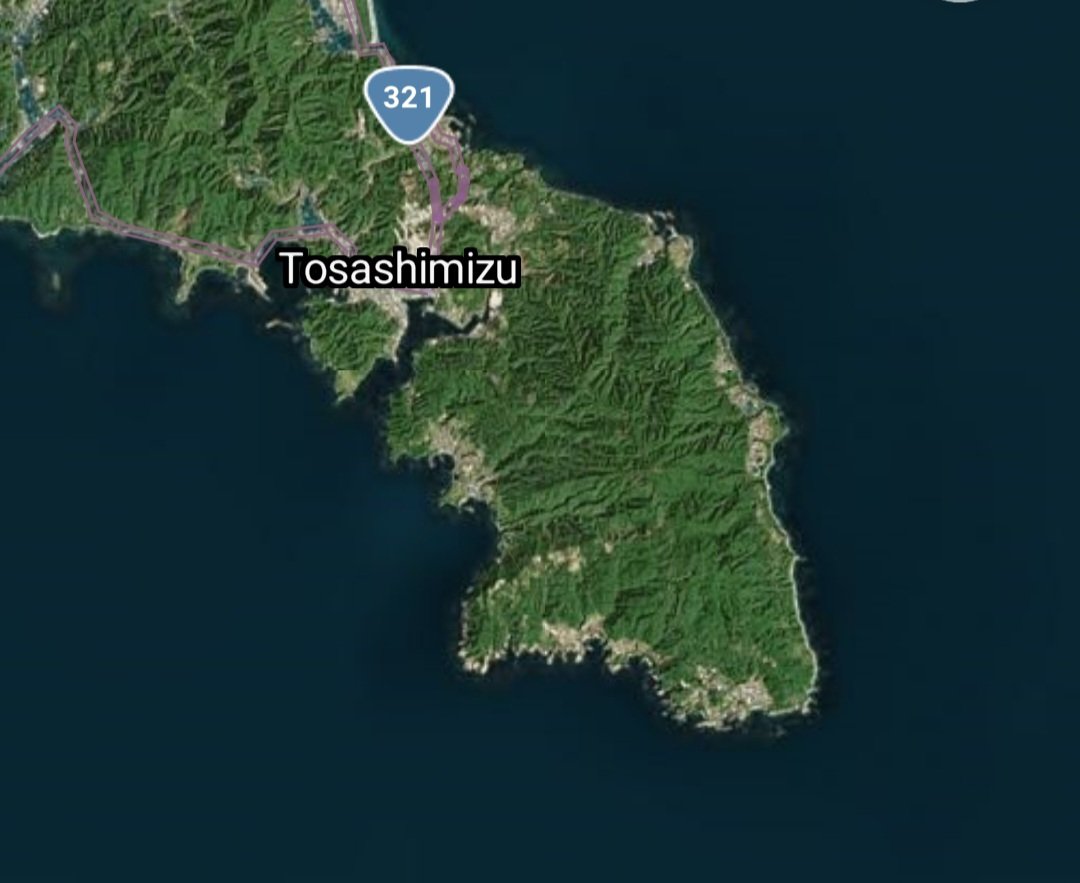
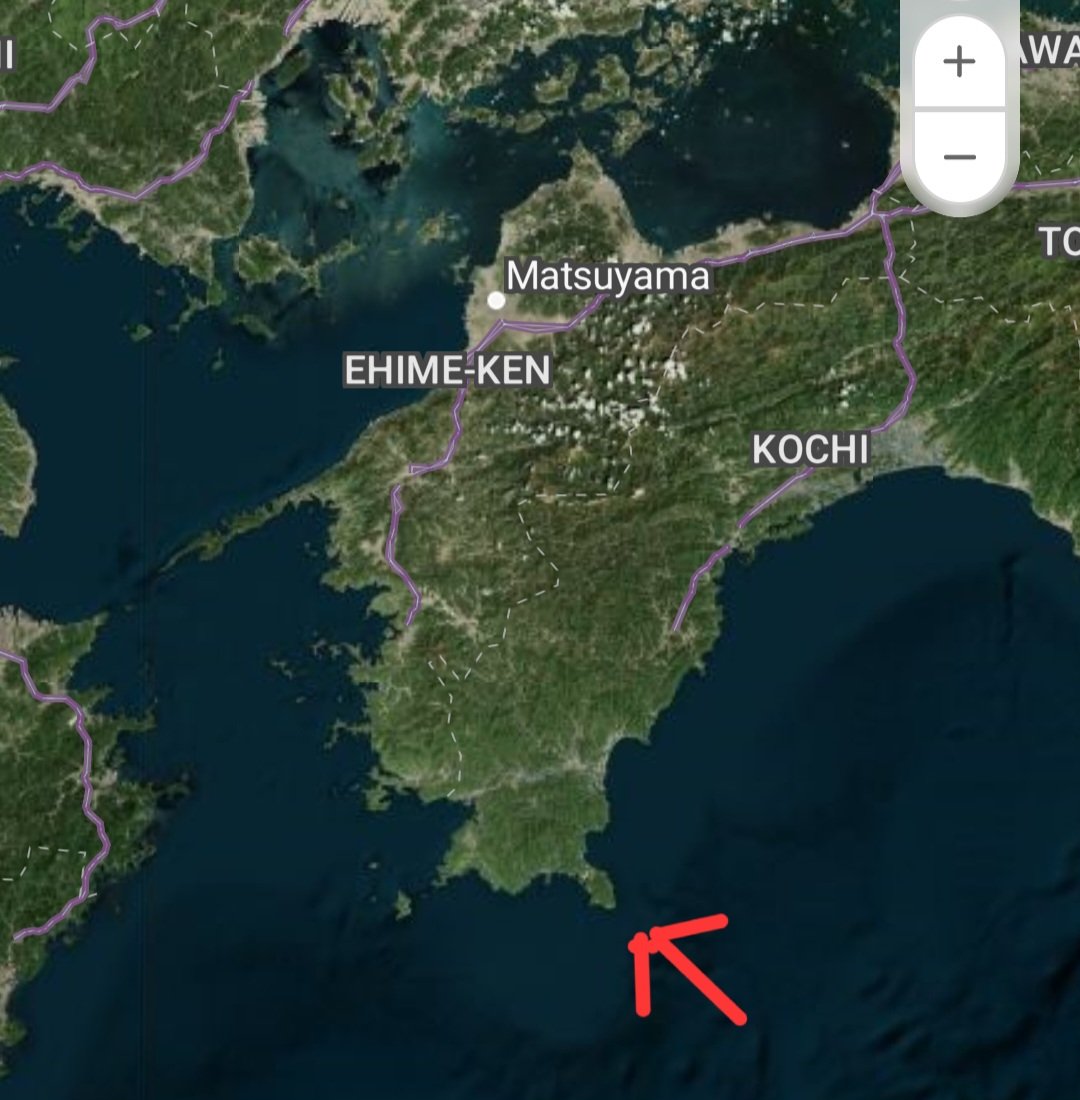
       Directly south of Ehime is obviously Kochi Prefecture. If you’ve been on JET more than a year, there’s a good chance you’ve at least visited Kochi City. With its original castle, famous Hirome Market, and delicious seafood, it’s a hard destination to miss. In fact, I’ve already written about it and other parts of the prefecture in my articles “Take Me Home Kochi Roads”, “The Muroto Triangle”, and “The Last Castles Standing”. So, it’s safe to say I’ve always felt a connection with this southern part of our island. That being said, Kochi is a big place. Just like how the south of the U.S. encompasses a wide area consisting of 16 states, Kochi itself is made up of many different towns and cities. Even after so many visits, there are still plenty of places I have yet to visit. The biggest of which (until recently) was Cape Ashizuri—the southernmost point of Shikoku and the climax of my Shikoku travels.

       Much like its right-hand counterpart, Cape Muroto, Cape Ashizuri is remote. From Kochi City it takes about 2hrs 45 minutes by car or 3hrs 30 minutes by public transit. It’s a mostly mountainous route that passes through dozens of small farming villages, deep valleys, and the occasional town like Susaki and Kuroshio. Coming from Ehime it’s quite the journey, but after reaching Shimanto City the long road finally starts to open up. Here the seemingly never-ending maze of mountains gives way to the crystal-clear Shimanto River.

        As Shikoku’s longest river it’s much more than just another body of water. The Shimanto River stretches a staggering 196 kilometers from Mt. Irazu all the way to the ocean in Shimanto City – and you can tell. While its sheer size is impressive, what makes it truly stand out is its status as Japan’s “last limpid (clear) river” (https://Shikoku tourism.com/en/see-and-do/10071). Part of that reputation comes from the fact that it’s the only major river in Japan whose main stream remains undammed. Thus, it has garnered high praise for its purity and untouched landscapes.

        Admittedly, I was painfully unaware of all this when passing through. With my mind set solely on making it to the cape I was surprised when suddenly thrust into a pristine river landscape that looked like something out of The Lord of the Rings. So much so that I ended up taking an hour detour just to check out the scenery. My photo doesn’t do it justice but I’ll definitely be back to explore the Shimanto river further. Not the least of which to see the nearly 50 submersible bridges that crisscross its length and the dedicated cycling route. Just be careful not to fall in if you visit.

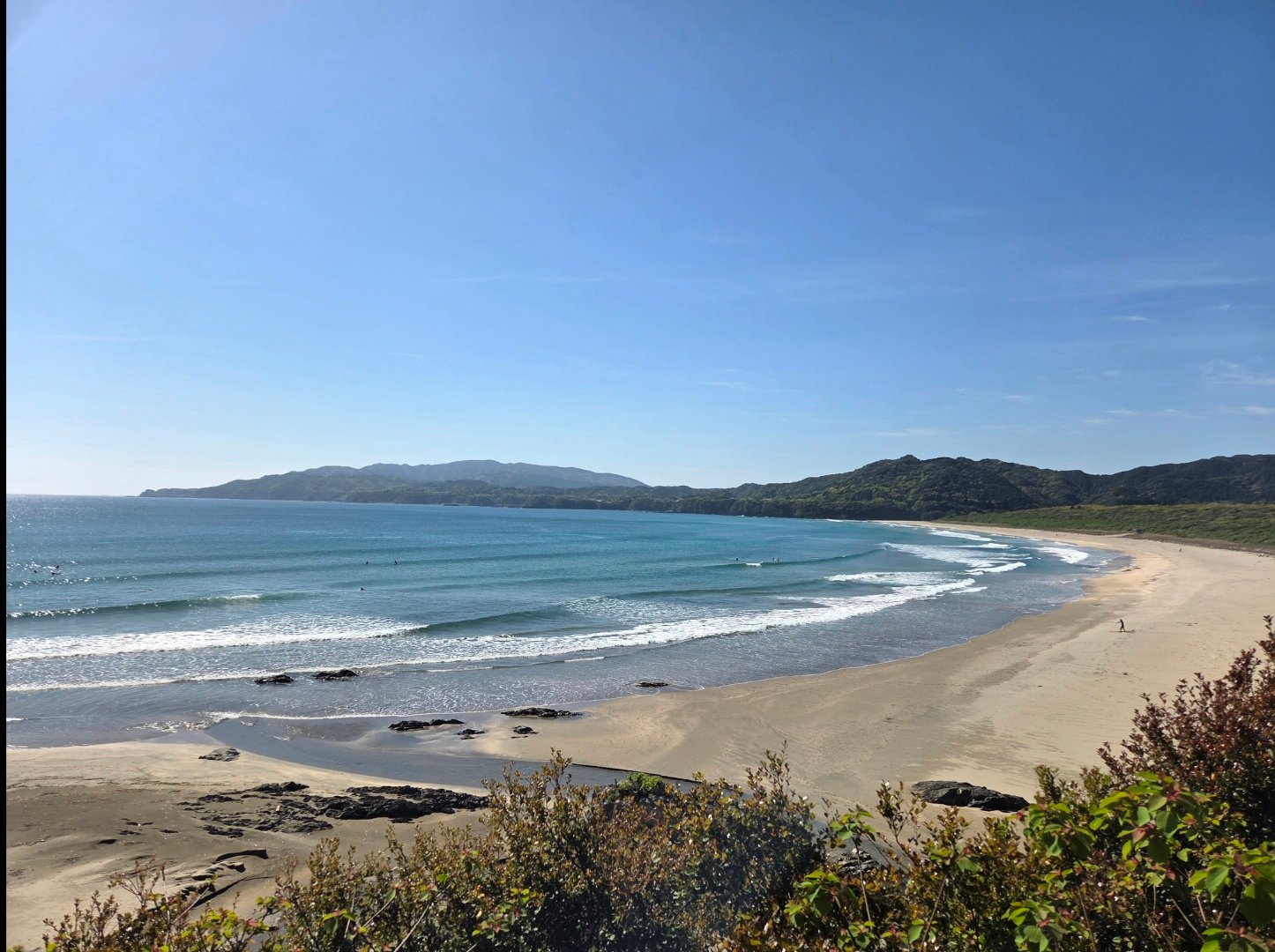
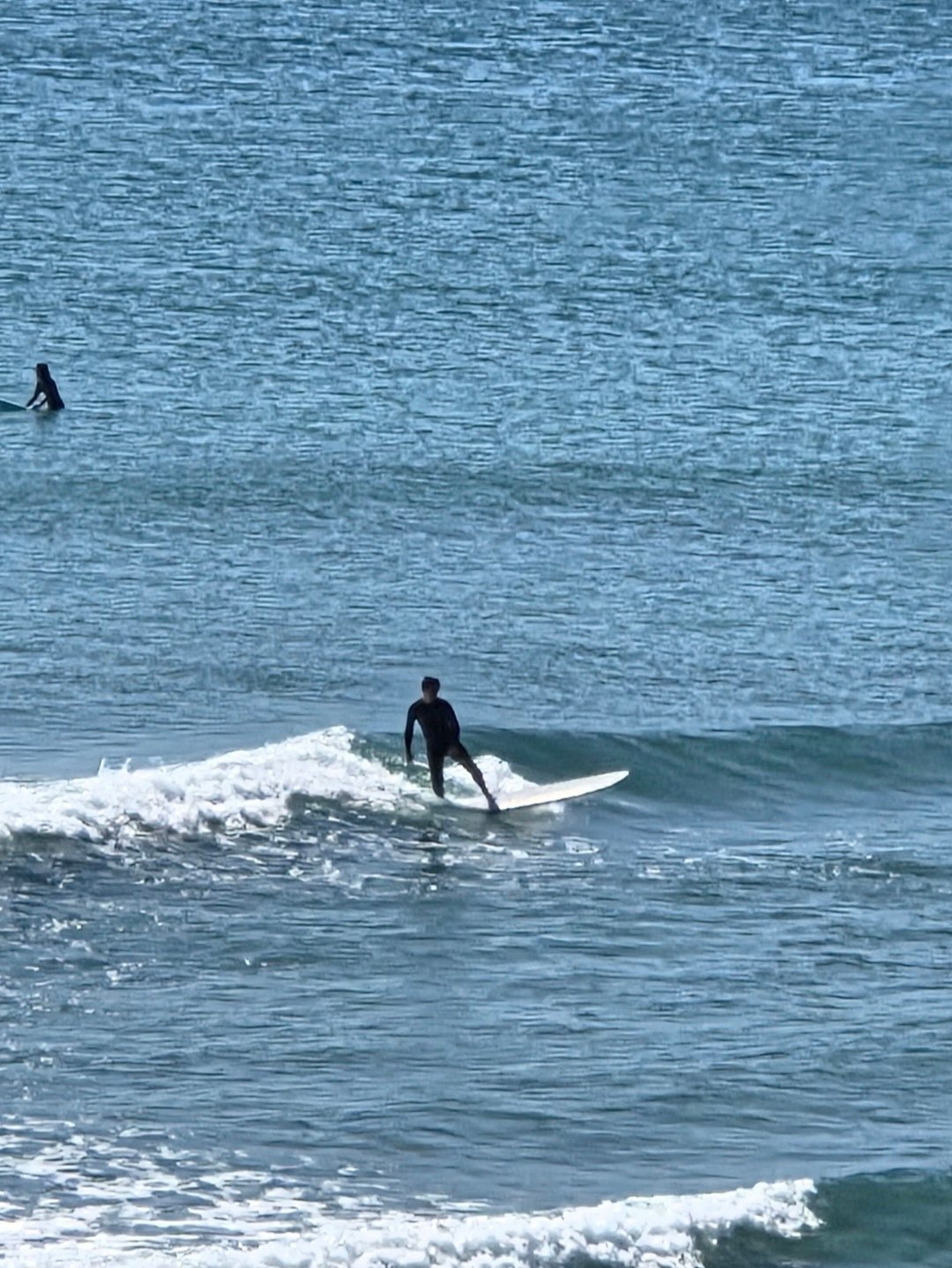
        While the river was a nice surprise, the real prize was just ahead. Not long after was when the sharp Ashizuri coastline really showed its colors. Compared with Cape Muroto on the other end of the prefecture, Ashizuri is unexpectedly steep. Whereas the former follows closely to the water’s edge nearly the entire way, the latter offers a bird’s-eye view of the ocean from the vantage of long cliff-side roads. Both offer incredibly beautiful scenery. But Ashizuri feels bigger somehow. Being so high up and seeing the landscape curve for miles into the distance really lets you appreciate just how vast Kochi Prefecture is. Starting from the locally famous surfing spot Oki Beach and going up, you won’t be touching sand again until reaching the tip. That said, if you’re looking to catch some great waves (or potentially UFOs according to one Google reviewer) Oki Beach is not to be passed by without at least a quick stop.
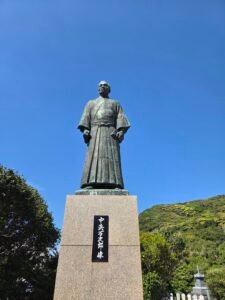
        And at last – the tip. After a long drive, a sore butt, and stiff legs, pulling into the southernmost parking lot of Shikoku was a reward in its own right. For me, it was very reminiscent of yearly drives down to Destin, Florida for vacation as a kid. Only, instead of being greeted by Jimmy Buffet at the Margaritaville I was greeted by a giant statue of Nakahama (John) Manjiro – the famous historical figure from the 1800s. 

       Born in the nearby fishing town of Nakanohama, John was shipwrecked and subsequently rescued by an American whaling ship. Instead of going home immediately, he accompanied them back to America where he became the first Japanese person to study abroad. After returning to Japan some years later, he worked directly under the shogunate teaching foreign affairs, translation, and even English. Ever since, he has been memorialized with not only the statue, but a museum as well for anyone wanting to learn more about his eventful life. John Manjiro’s story is well beyond the scope of this article. However, it was somewhat amusing to travel all the way down to Cape Ashizuri only to be met with someone who was (partially) the first ALT.

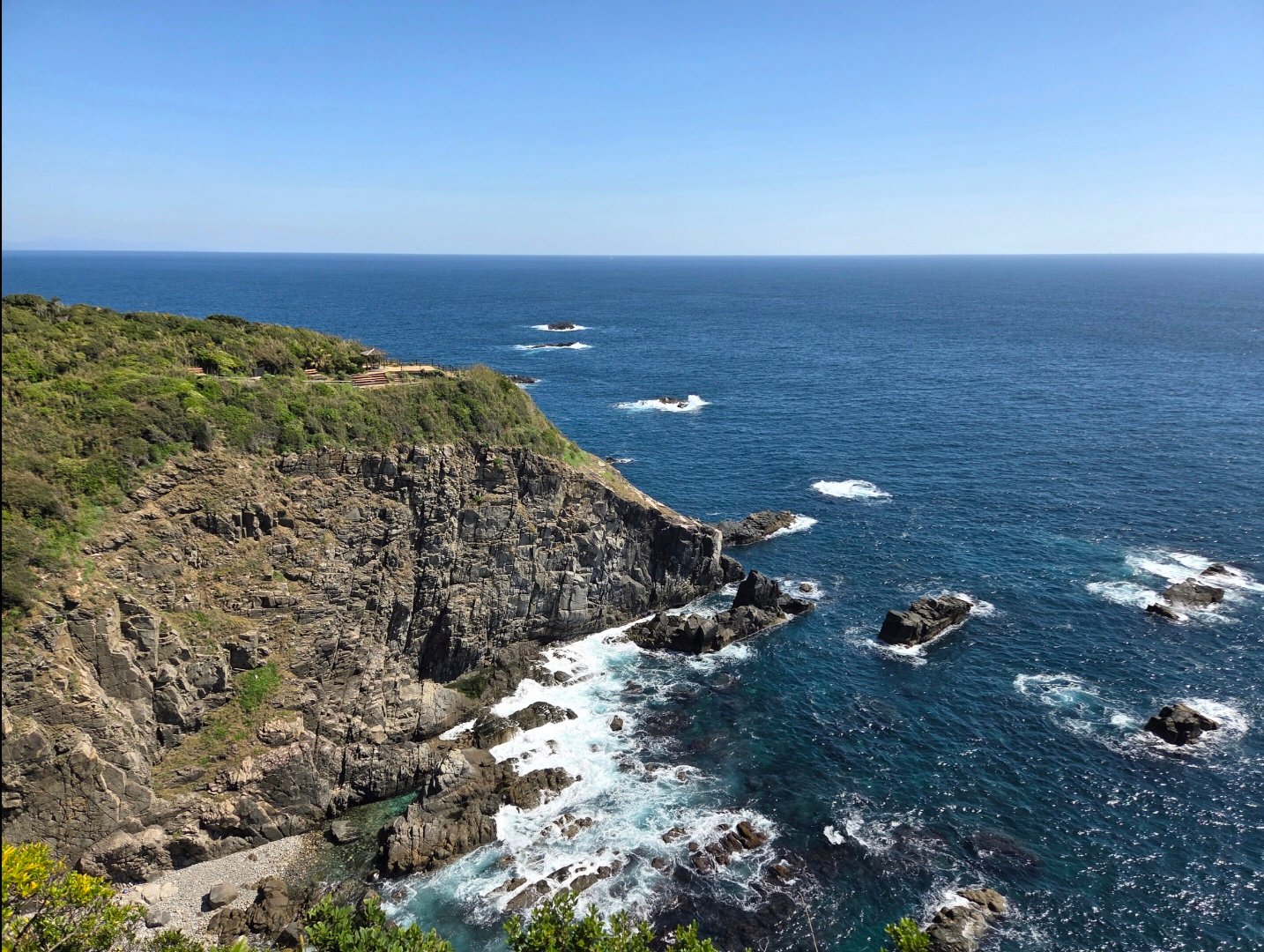
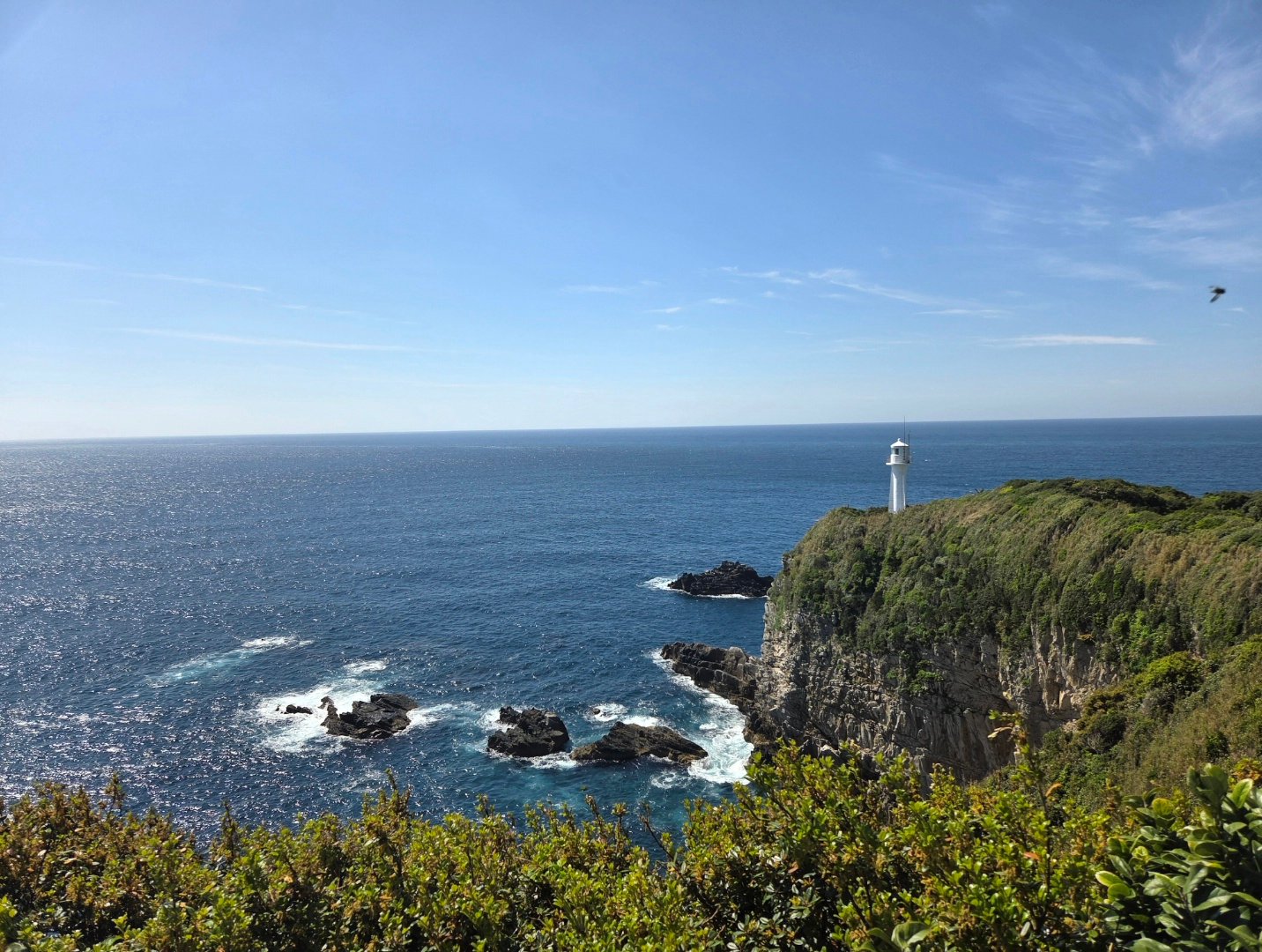
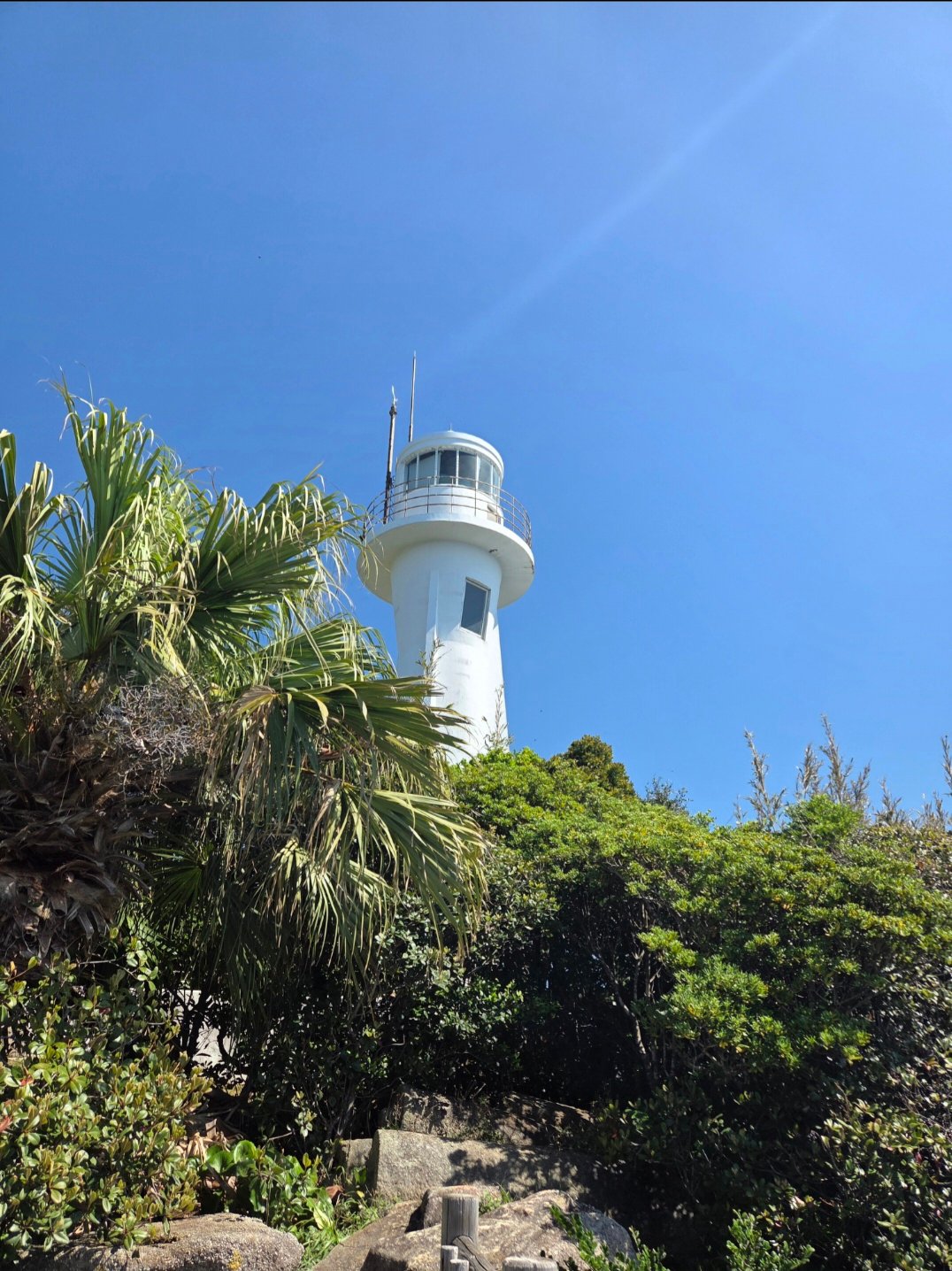
         Beyond the history, Ashizuri is simply beautiful. The windswept granite cliffs tower 80 meters above the ocean, while the waves crash and spray against the glistening rocks below. There is a constant roar in the air from the raw oceanic power on display which, along with the nearby Kongoufukuji Temple, gives the cape a spiritual atmosphere. It’s the kind of place that forces you to stop and just breathe. Not only that, but from the viewing platform you can see the Cape Ashizuri Lighthouse standing precariously on the edge acting as the cape’s crown jewel. Via a short nature walk through a subtropical canopy of camellias and past the “Hole into Hell” (which feels only a little out of place) you can get right up close to admire its commanding figure. Just behind the lighthouse is the southernmost publicly accessible point of Shikoku. While the view isn’t quite as good as the one from earlier, there is an undeniably magical feeling of having touched the very edge of the island.

        Reaching the “end” of the island doesn’t mean it’s over. By following the scenic nature trail another 20 minutes along the coast, you’ll reach a geological feature that’s equally as impressive. Go down the steep 130-meter stairway, past a cliffside shrine, and you’ll arrive at the enormous Hakusan Natural Arch. Vaguely heart-shaped, this arch is a perfect example of the sea’s sheer power to shape the landscape. Carved by waves for thousands of years, the arch feels almost unreal. Hidden away beneath the cliffs, it genuinely feels like discovering some forgotten treasure. In fact, when I visited, I couldn’t help feeling like I had seen it in one of the Pirates of the Caribbean films. However, instead of pirates and cannon fire, it was incredibly calm. There is even a free footbath at the end of the trail (after climbing the stairs again) where you can relax with a fantastic overhead view of the arch.

         Together, the lighthouse, temple, and arch are undoubtedly the cornerstones of Cape Ashizuri. They are easily some of the most striking landscapes you’ll find on an island already known for its amazing scenery. Still, having come as far south as possible, it would be a shame to stop there. If you came by car and don’t mind a bit more adventure, there are still plenty of other spots worth stopping by. One in particular that I visited is just a short 15-minute drive from there. Down a narrow back road followed by a short hike through the woods is the Ryugu (dragon) Shrine. Dedicated to a sea god from Japanese mythology, this shrine’s name isn’t just historical. Swirling waves crash against one side while sharp cliffs rise on the other. Cutting through the middle toward the bright red torii gate at the end is a narrow rocky pathway that almost resembles a dragon’s spine. Getting there is half the experience. Its isolation and dramatic setting make this geological beast feel strangely timeless, yet definitely worth a visit.

          Dragons aside, what I found more surprising was just how oddly similar Shikoku’s “south” is to the one I’m familiar with. You definitely won’t find any stretch of coastline that’s nearly as impressive in places like Myrtle Beach, South Carolina, or Panama City Beach, Florida. However, that feeling of driving down a long mountain road and discovering something special at the other end was incredibly nostalgic. For Georgia, it might be an old barn down by the river with a small farmer’s market selling apple butter. For Kochi, it’s places like Kure Taishomachi Market selling delicious local seafood along a historic road. Both are filled with lesser-known, but equally meaningful places for the people living there. While they look and feel visually distinct, their souls and small-town appeal are very much the same.

         I only went for a day trip, but I genuinely hope to go back and soak up more of Cape Ashizuri’s unique small-town coastal atmosphere. The nearest college football game may be an ocean away, but with so much more to discover in Kochi’s southernmost region, I’d be first in line to buy a season pass if I could. From the sharp, subtropical coastline to the delicious seafood, it’s a place every ALT should visit at least once – not just the ones from the southeastern U.S.

        For me, it was an especially meaningful experience. Not only because I’ve wanted to go even before moving to Japan, but also because this is my final travel article for Ehime AJET. It has been an amazing journey traveling around and writing about the far corners of Shikoku. Whether it was to the top of Mt. Ishizuchi or the mysterious Nagoro Scarecrow Village, I really appreciate everyone who has kept up with my adventures over the past few years. I genuinely hope every ALT gets the chance to discover all the amazing places our island has to offer. Having finally been to Cape Ashizuri and conquered the last boss of my Shikoku travels, I feel this is the right place for the game to end. I wish you all the best, and as Truman Burbank in the film The Truman Show once said, “Good morning, and in case I don’t see ya: Good afternoon, good evening, and good night!”