A 70-Year-Old’s Guide to Screwing Up in Japan
by Michael Walsh
Imabari City ALT, 2025–2026
My major accomplishment since moving to Japan last year has been to dramatically improve my ability to screw up. On my first day driving backwards in Japan, I discovered why water drainage mizo are called “gaijin traps.” I frequently missed appointments, forgot to bring important documents to meetings, sat reading in the staff room when I should have been teaching, and inadvertently offended colleagues with my lack of cultural awareness.
A notable highlight was narrowly avoiding being arrested for trespassing by a very angry police officer.
The cumulative humiliation, embarrassment, and erosion of self-esteem created by these episodes may have crushed a younger me, but I have come to realize, after 70 years, that most of life’s problems can be overcome with a positive attitude, a large glass of scotch, and a good night’s sleep.
Having fallen in love with Japan and Zen philosophy in my 20s through reading D.T. Suzuki, Alan Watts, and Eugen Herrigel, I was keen to further my study of Japanese culture. Watts advised that it was a waste of time to try and understand this exotic mode of thought by reading books. He suggested practicing a traditional Japanese art form such as Shodo, Ikebana, Chado, or perhaps one of the martial arts. I stored this information away until a violent episode at a drunken New Year’s party indicated an urgent need for anger management therapy.
A fellow musician introduced me to his karate Sensei. The physical intensity of karate combined with the numerous Japanese rituals was catnip to me and proved a perfect medium to sublimate my aggressive tendencies, allowing me to function as a somewhat civilized Canadian. A fulfilling 36-year career teaching karate, four trips to Japan, and several occasions hosting Okinawan karateka in Toronto deepened my respect and passion for Japanese culture and traditions. I wanted more and wrote down this goal: “I will live in Japan for an extended period.”
I sold my dojo and retired in 2024, and for just over a year I settled into a blissful daily routine of Tai Chi and archery in the mornings, music in the afternoons, and dinner with my family in the evenings. This carefree lifestyle ended when my Japanese-Canadian spouse expressed her desire to explore her family’s roots by working as a teacher in Japan for “a year or so.”
I immediately agreed to accompany her, and we submitted our applications. We blinked and arrived excited and exhausted in Matsuyama in August 2025.
My initial impression was that everything in Japan seems smaller than in Canada. My JTE’s Kei car looked like it belonged in a cartoon. How can they be so small outside and so big inside? I christened it the Tardis.
I also realized quickly that Japan is a land of contradictions. Not everything makes sense. It’s illegal to talk on a cell phone while driving in Japan, but please feel free to watch television. Sensei’s car had a screen bigger than my iPad, and she monitored a baseball game all the way to Imabari. The Tigers won the game, we arrived safely, and after a few days acclimatizing to the vicious heat, we went to work.
I love teaching and was excited to have the opportunity to try my hand at teaching English. I had an idea to use music and humor to motivate my students into becoming skilled English conversationalists. My first three weeks were encouraging. I taught a couple of self-introduction classes each day, and the students seemed to enjoy my schtick. I was shocked when, after having met every kid in the school, my schedule suddenly went blank.
My role became assessing group presentations, helping the occasional contestant in an English speech contest, and marking essays and exams. This was not what I’d signed up for, but I deduced that it was because what I had to offer was useless to both students and teachers. A high school ALT can add little value to the Japanese method of teaching English, as the system’s primary goal is to prepare students for university entrance exams. English language proficiency is judged by reading and writing, and there is no need to speak a single word of English. The teachers didn’t even invite me into their classrooms, in spite of my requests.
I accepted my fate and chose to use the creative energy that this new environment was sparking in my brain to write songs, poems, and lesson plans during my long days in the staff room. I had already written a couple of songs for my Jiko Shokai and had performed my “Ode to Imabari” on the local radio station during an interview. I was inspired by small-town life. Riding past rice fields on my clunky mama-chari, I found myself singing out loud as new lyrical and musical ideas continually sprung into my mind. I awarded myself the honorary position of writer-in-residence and greedily searched for and consumed the cultural tidbits that floated through the staff room atmosphere.
I visited the Karuta after-school club to find students playing a high-energy card game based on thousand-year-old poems. The Shodo, Kendo, and Kyudo clubs welcomed me as an honored guest whenever I dropped by for a dose of bunka.
Another byproduct of my desk-warming days was the tremendous respect I developed for Japanese teachers. I felt humbled by the dedication of my colleagues, who routinely put in twelve-hour days and work weekends with enthusiasm and without complaint. The culture may change, as I have been told there is a problem recruiting new teachers because of the insane workload demanded by the profession.
Having settled into a routine, I could now look around more calmly and think about what was happening to me. This was the second time I had been an immigrant, and my first as a visible minority. It is wonderfully liberating to leave one’s home environment and surround yourself with new people. You can reinvent yourself and become whoever you want to be. Nobody knows you, and nobody tells you what you should or shouldn’t do. However, you also cannot speak, read, or understand a thing. You must resort to communicating with gestures, tone of voice, broken Japanese, and telepathic instinct. You may be sophisticated, witty, and charming (or think you are) in your native tongue, but in Japanese, you are just a bumbling fool.
This old fool decided, “If they won’t let me teach, I’m still going to interact with the students.” I’d eat an early lunch, grab my ukulele, and sit in the garden singing songs to the kids who were enjoying an outdoor lunch break. I love these kids. They are super-bright, small-town kids with few inhibitions and a charming naïveté that Canadian kids don’t have. They’d sing along with me and suggest songs they liked. I’d do my homework and come back ready to go, which delighted them almost as much as it thrilled me.
The bell to end lunch would ring, and I would run back to the staff room for my favorite activity of the day: Soji. In Canada, the daily ritual cleaning of my karate dojo was ingrained into my identity through long practice, and I happily accepted my assignment to the staff room cleaning crew.
Another myth was soon to be busted: Japan’s legendary cleanliness. I realized that although staff and students enthusiastically clean for ten minutes daily, the school is essentially filthy. In my Canadian dojo, although we cleaned daily, I still paid a professional cleaning company to come in three days a week. Not once in the past ten months did I see a cleaning crew enter my Japanese high school, yet it was obvious that their services were desperately needed.
And what’s up with brushing your teeth and spitting in public?
Being on the lowest rung of the staff room status ladder, I have the seat next to the sinks. On my first day of school, I heard gargling and horking behind me and turned to see a teacher facing me as he brushed his teeth. It seemed wildly inappropriate to me, but after witnessing it dozens of times daily, I am now proud to announce I can also brush my teeth in public without embarrassment—though I cannot bring myself to gargle and spit noisily. I also face away from the staff room, looking at my slightly embarrassed image in the mirror. The most confident staff toothbrushers stand facing the staff room, gazing blankly into midair as they work on getting a good mouthful of frothy toothpaste away before turning to hork and dribble into the sink.
I have been treated with both kindness and indifference by many of my fellow staff members, while others have actively—and in some cases aggressively—ignored me. I had returned from a trip and brought little treats to share. Being unsure of good form and wishing not to disturb people who were working, I placed my offerings on desks while the staff room was mostly empty. Most teachers thanked me and some ignored the gesture, but one took it upon themselves to demonstrate the right way to do it by handing out omiyage loudly and ostentatiously to every teacher in our seating area except me. I later realized it was a Japanese lesson in etiquette.
Rather than becoming upset and withdrawing into my essay marking, I chose to set myself the task of winning them over by demonstrating my respect for the privilege of being admitted to their workplace. I bowed formally every time I entered or left the staff room. I took on the lunchtime Soji duty of emptying each teacher’s garbage can and replenishing the staff kettle. These jobs I stole from other teachers by starting cleaning two minutes before they usually did, and they didn’t complain. I also understood and appreciated that some teachers’—and my own—reluctance to interact was because their English and my Japanese were insufficient for a pleasant chat. But I smiled and bowed a lot and studied my Duolingo. At the end-of-term nomikai, I discovered that both their English and my Japanese improved with a couple of drinks, and we had pleasant, mostly coherent conversations.
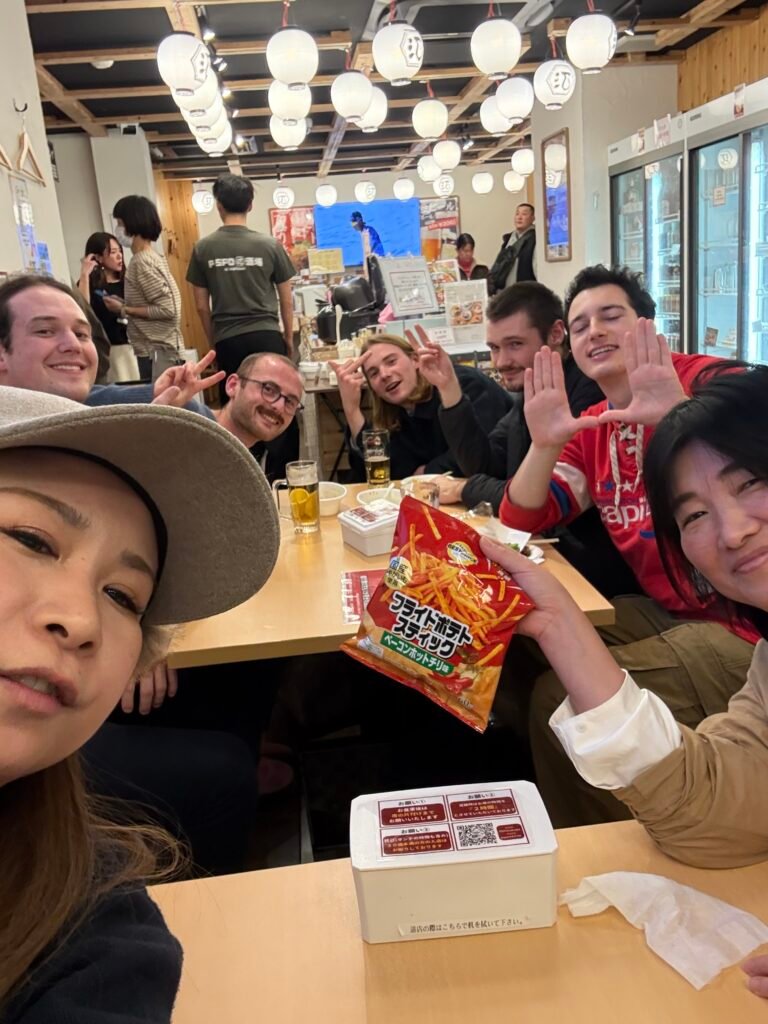
There were ten English teachers in my school, so I had few opportunities to speak Japanese, which was frustrating as I wanted to make as much progress as possible. A solution offered itself through my musical activities: I met some bluegrass musicians. Yes, that’s what I said—American bluegrass fanatics! They were skilled musicians, and they generously introduced me to their community. I found myself commuting to Matsuyama monthly to sing country songs in a basement bar and hang out afterwards in an izakaya. This was more my style, and it led to other opportunities.
I played a St. Patrick’s Day gig in the streets of the Imabari Ginza, singing “Molly Malone” to a handful of enthusiastic Guinness drinkers. I was invited to a house party in Oshima where talented musicians socialized over a potluck dinner and then took turns doing 20-minute sets. A highlight was going on the road to perform at the “Blue Brew Brewery Bluegrass Festival” in Nyodogawa (I’m not kidding, that was the name!).
In all of these situations, I was treated with great kindness, respect, and genuine warmth. I felt a closeness to people I could barely understand, like they were long-lost friends, and almost always there turned out to be some curiously similar interest or experience that we had shared in our very different lives. I often used the phrase “there are no coincidences” to remark on the many synchronous events that my life in Japan offered up.
Occasionally, I found myself in the presence of someone who made it clear through body language that they disapproved of my presence. My white privilege hackles were raised by their actions, but rather than being aggressive or ignoring them, I drew attention to myself by bowing deeply to them and excusing myself with my assorted apologetic expressions. I still don’t know which to use when, so I run them together into a “Shitsurei, sumimasen, gomen nasai” verbal stew.
Being only able to function at the verbal and literary level of a child, I have found that, happily, my sense of wonder has been sharpened. I take photos of flowers and bushes, ears of rice, and weeds. I am fascinated that new blossoms appear every month of the year (doesn’t happen in Canada). As I ride by the two tiny ancient ladies who tend a huge garden near my apartment, my soul sings with joy for reasons I don’t understand. People on the street say “Konnichiwa” as I ride by, and the bliss button is pressed again. I love it when the old lady at the grocery store giggles every time she cashes me out and I try to thank her in Japanese.
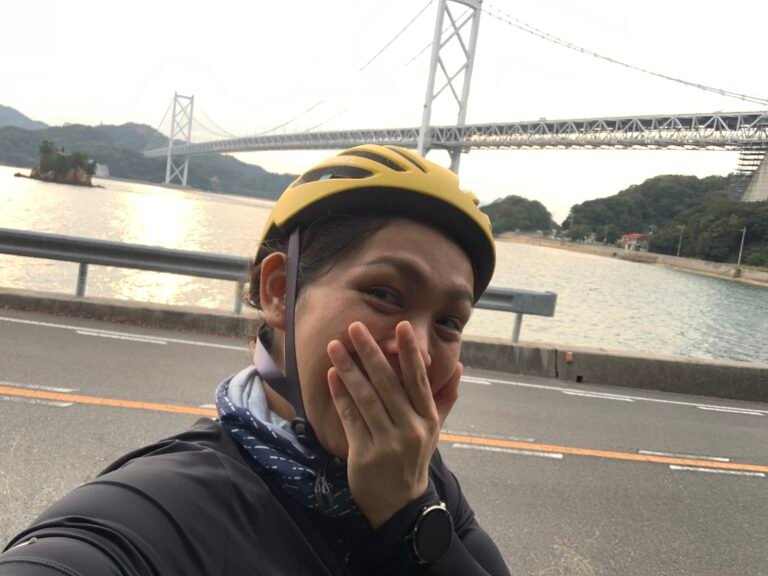
I sing out loud when I ride my bike because I feel so damned happy to have been privileged to spend a year absorbing this ancient culture and having an insider’s view of the culture shock the younger generations are going through. They eat McDonald’s for lunch and Grandma’s oden for dinner.
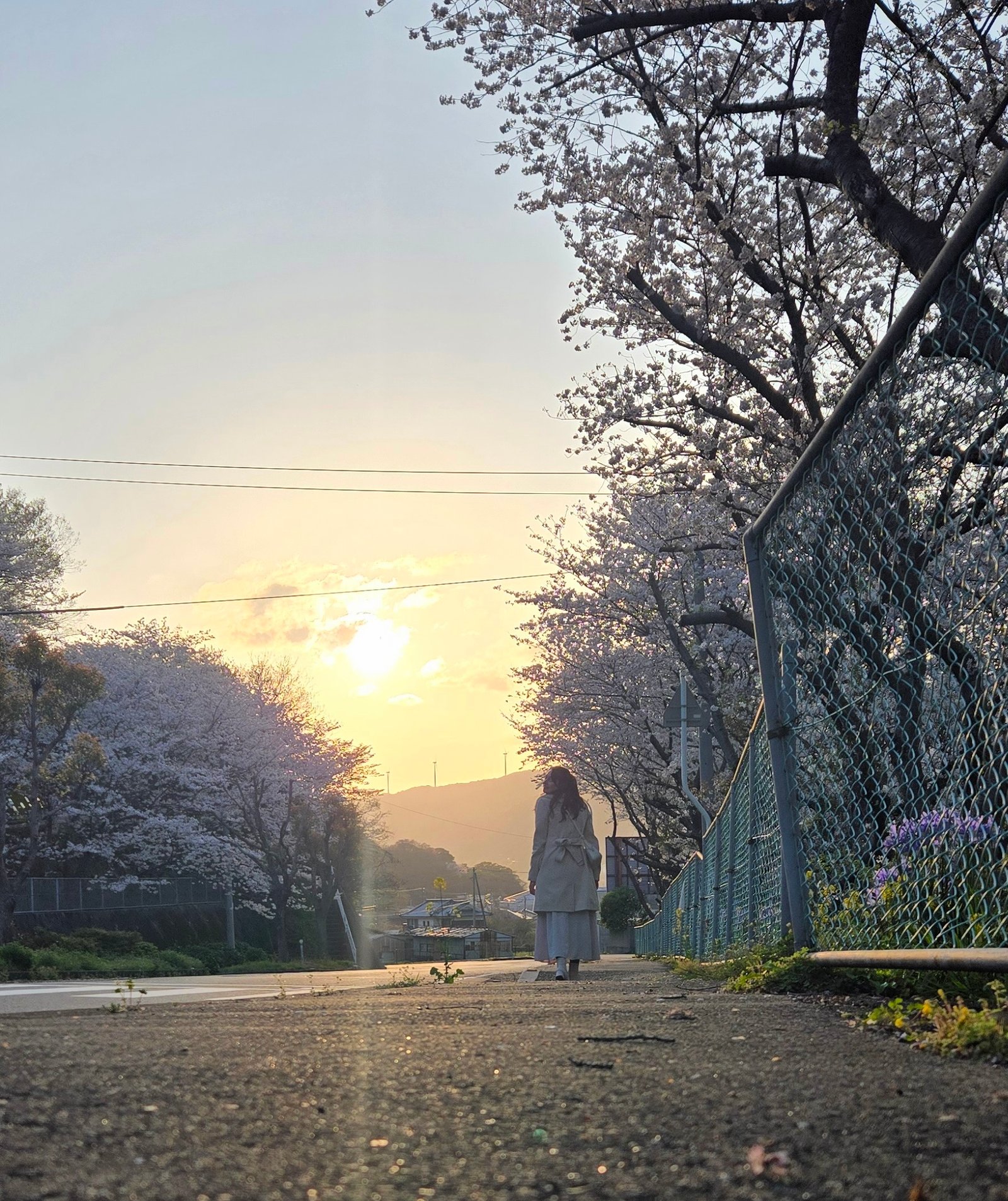
Japan has captured my heart, and I plan to return to Imabari annually for my St. Patrick’s Day gig and to watch the sakura bloom and die.
I am grateful to my wonderful wife Margaret for the inspiration and support to make this trip. Without her love and care, I would not have been able to float through this magical year. I love you, Margaret. I am also grateful to my fellow JETs who have been so kind to “the old guy.” I wish you all well and leave with a tinge of jealousy for your youth. If I were 23, I would be figuring out how to stay here permanently.
What an amazing country. What an amazing opportunity.
Don’t waste a second of this wonderful life. Carpe Diem.