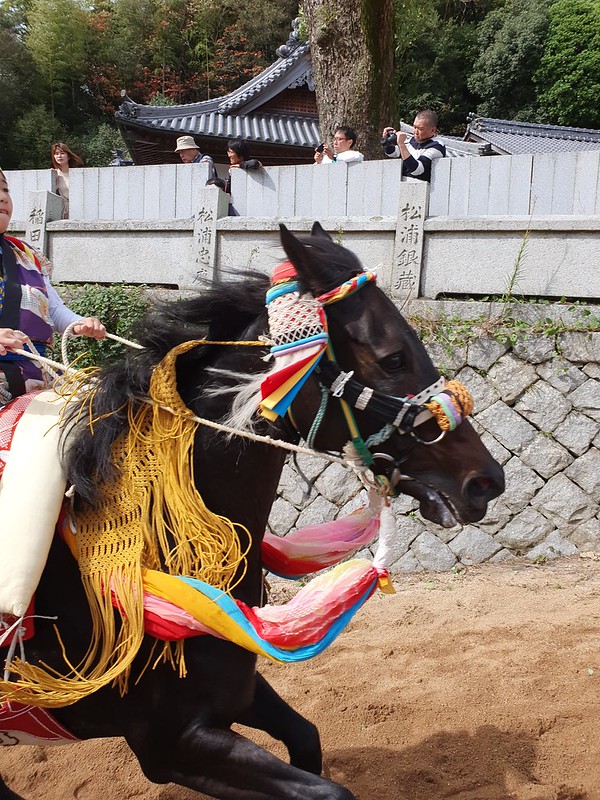
Hey everyone! I’m Christian and I am from the small country of Trinidad and Tobago (/ˈtrɪnɪdæd … təˈbeɪɡoʊ/). For those who don’t know, it’s actually a country in the Caribbean archipelago that comprises of two main islands, Trinidad… and… you guessed it… Tobago. I hail from the larger sister island, Trinidad but from a very small, rural village called Manzanilla (a name of Spanish origins but the pronunciation has been anglicized). Trinidad and Tobago is fairly known in the Western hemisphere, however, halfway across the world in Japan, especially in a Prefecture such as Ehime, my country is barely known to the locals, or so it may seem.
A year ago, I was told that three of my five schools would be in the islands, and I would have to take the ferry or the kousoku, the express boat, to the islands and then find my way to school. That was how my journey to Nakajima and Nuwajima began.
I ran the first and personally dubbed Ehime ALT Half Marathon on June 29th of this year with two other ALTs in Ozu, Ehime. This was to be my fifth official half marathon. It was to be their first.
We were three total. Women. English teachers. Independent. Strong. Sore. Thirsty. Determined. We finished.
When I first applied to JET, the question of “What sort of person becomes a JET?” was not at the forefront of my mind, but I certainly had an image. The image I had, of a young, straight out of university, genki American or British person, was certainly reinforced the sorts of people who appoint themselves representatives of the programme on social media.
A fundamental part of this blog is, and always has been, reviews. Shaping our own experiences in such a way that others can get something out of them is a powerful way to communicate with audiences, and when that experience is something someone else can also take part in, a review is the most direct way to express that. Nowadays, the pop culture idea of what a review is still has this idea of being connected to a star rating or a number out of 100, but the reviews I’ve seen published in the last year are nothing like that. Take Joshua Hill’s review of his experience at Matsuyama castle, or Niall Magee’s experiences with VR in Tokyo. Both are very different ways of approaching very different materials, but both are essentially reviews.
As an elementary school ALT, I’ve played many roles. I have been the tape-recorder: reading dialogue from a script as the children fidget and try to match pictures to numbers based on what I’m saying. I have been the planner. I have prepared materials and designed lessons. I have adjusted things between classes and addressed problems that came up unexpectedly. I have been a kind of class pet: little children literally climbing on me, pulling at my hair, shouting for my attention, comparing hand and foot sizes, marvelling at my non-brown eyes and occasionally trying for that elusive kancho – and that’s where I draw the line.
Every three years, a contemporary art festival draws thousands of Japanese tourists and foreign visitors into the sparsely populated islands resting in the sea between Honshu and Shikoku. The Setouchi Triennale, also known as the Setouchi International Art Festival, began just nine years ago in 2010, but it has already garnered acclaim as a top destination in the contemporary art world and as one of the most unique events to take place in Japan. Whether you’re an art lover or an island adventurer (or both!), the Setouchi Triennale offers something for every kind of Shikoku explorer. As JETs in Ehime, we are extremely lucky that the Setouchi Triennale happens in our backyard. Here’s a short guide to the festival, general background and visiting information, and a brief snippet on one of my favorite islands of the area.
A few weeks before leaving for Japan, I found out from my predecessor that I would be teaching in five high schools within the Nanyo B region and two special needs schools. Now, I already expected that there would be quite a bit of travel involved in the position since it’s not uncommon for ALTs to have more than one school but teaching in a special needs school wasn’t something I was ever prepared for—hence the panic. While my degree provided a short course on special education, I only had theories and no hands-on training in an environment with special needs learners.
I’m a high school ALT in Imabari, Ehime and I’ve been here for almost four years. I know many of you have different schools you go to, but I am one of the lucky ones. I only have one school because my school is not an ordinary high school. It’s a secondary school. There are few secondary schools in Ehime so when I first got here, I didn’t know what that was. Let me explain what that means.